That Gut Feeling Is Lying to You: How Cognitive Biases Dress Up as Strategy
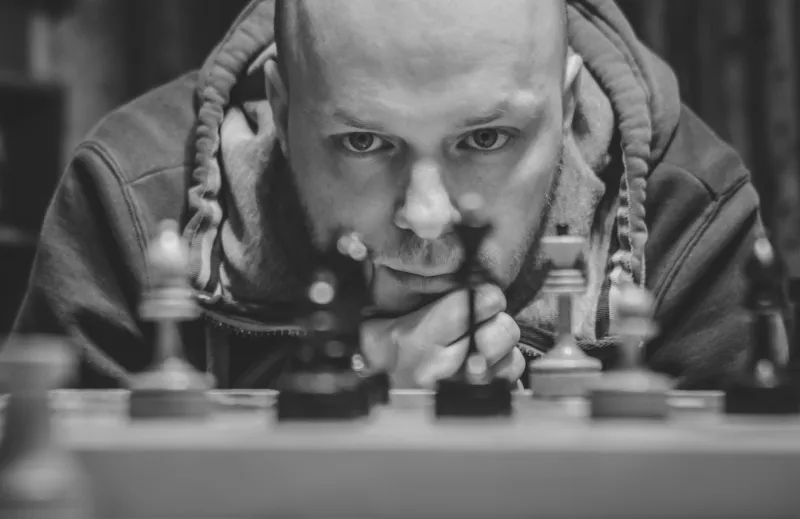
Ask any losing player why they made the call that cost them a session, and you'll almost never hear "I wasn't thinking." You'll hear the opposite. You'll hear a well-reasoned explanation — confident, detailed, internally consistent. The story will sound like strategy. It will feel like strategy.
It wasn't strategy. It was a bias wearing a strategy costume.
This is the part nobody talks about enough: cognitive biases don't announce themselves. They don't show up as confusion or hesitation. They show up as clarity. As certainty. As that quiet voice saying I've got a read on this. And by the time you realize you were wrong, the money is already gone.
The Lineup: Biases That Consistently Cost Players Money
Anchoring Bias — When the First Number Wins
Anchoring happens when your brain latches onto an initial piece of information and uses it as a reference point for every subsequent judgment, even when that reference point is irrelevant or misleading.
In a betting context, this plays out constantly. Say you open a session expecting to be up $300 by midnight — an arbitrary number you've told yourself represents a "good night." From that point forward, every decision you make gets filtered through that anchor. When you're at $180 profit and considering a conservative exit, the anchor pulls you back in. You're not up enough yet, your brain insists. So you keep playing past the point where the smart move was to stop.
The anchor wasn't based on the game conditions. It wasn't based on your edge in that session. It was just a number you made up — and it ran your decision-making for hours.
Confirmation Bias — Building the Case for What You Already Believe
Confirmation bias is the tendency to seek out and weight information that supports your existing belief while dismissing or minimizing evidence that contradicts it.
For gamers and bettors, this is devastating because it feels exactly like doing your homework. You research a bet, and you find three solid reasons it looks good. What you don't do — what confirmation bias actively prevents — is spend equal energy looking for reasons it might be wrong. You've already decided. The research is just the closing argument.
Here's a real scenario: you've convinced yourself a particular slot has been "cold" and is due for a payout. You notice the two near-misses in the last ten spins — confirmation that it's heating up. You ignore the twelve spins before that where nothing happened. You're not analyzing the game. You're assembling a case for a conclusion you've already reached.
The Illusion of Control — Skill Where None Exists
Humans are spectacularly bad at accepting randomness. We are pattern-recognition machines, and we will find patterns in pure noise if we stare at it long enough. The illusion of control is what happens when that pattern-recognition instinct convinces us we have influence over outcomes that are genuinely random.
This shows up in the player who insists on pressing the button at exactly the right moment on a slot machine. It shows up in the sports bettor who believes their deep knowledge of a team's injury report gives them an edge that the sportsbook's entire analytics department somehow missed. It shows up in the card player who "knows" they can feel when the deck is running hot.
Some of those situations involve real skill. Many don't. Bias makes it very hard to tell the difference.
How to Audit Your Own Thinking
The uncomfortable reality is that you cannot simply decide to stop having cognitive biases. They're hardwired. What you can do is build external systems that catch them before they cost you money.
The Steel Man Test
Before committing to any significant decision — a big bet, a session extension, a game selection — force yourself to make the strongest possible argument against what you're about to do. Not a token objection. A genuine, rigorous case for the opposite position. If you can't construct one, that's a red flag. Either the decision is genuinely obvious (rare), or you're so anchored in your existing belief that you can't see the counter-argument (common).
The Stranger Test
Describe your reasoning to an imaginary stranger who has no emotional investment in the outcome. Would your logic hold up to a skeptical audience? Or does it only make sense because you were there, you felt it, you had a read? Externalizing your reasoning — even mentally — strips away a lot of the emotional scaffolding that biases rely on.
Track Predictions, Not Just Outcomes
Most players track wins and losses. Fewer track their predictions before outcomes are known. Start logging what you expected to happen before each session or significant decision, then compare it to reality over time. Calibration gaps — where your confidence consistently outpaces your accuracy — are bias fingerprints. They tell you exactly where your intuition is lying to you.
Create Pre-Commitment Rules
The most reliable way to defeat bias in the moment is to make your decisions before the bias has a chance to activate. Set your stop-loss before the session starts. Decide your exit conditions when you're calm and rational, not when you're down $150 and your threat-response system is screaming at you to get even. Pre-commitment rules are essentially your rational self writing instructions for your emotional self to follow when things get heated.
The Meta-Skill Nobody Teaches
Strategic thinking in gaming gets a lot of attention. Pot odds, betting patterns, game selection, bankroll management — these are all teachable, learnable skills. But the meta-skill underneath all of them is epistemic hygiene: knowing how to evaluate your own thinking, identify its failure modes, and correct for them systematically.
Your gut feeling isn't always wrong. Sometimes it's pattern recognition built from genuine experience, firing accurately and fast. But sometimes it's a bias in a trench coat, and the difference between those two things is worth a lot of money over the course of a year.
The players who win consistently aren't the ones who trust their instincts blindly. They're the ones who've learned to interrogate those instincts — and know which ones to follow.