Crowd Pressure, Clutch Moments, and the Psychology of Playing in Public
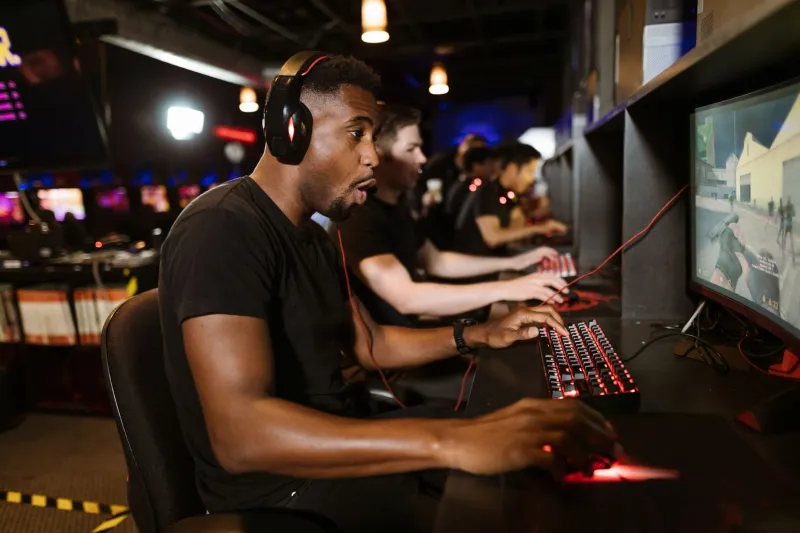
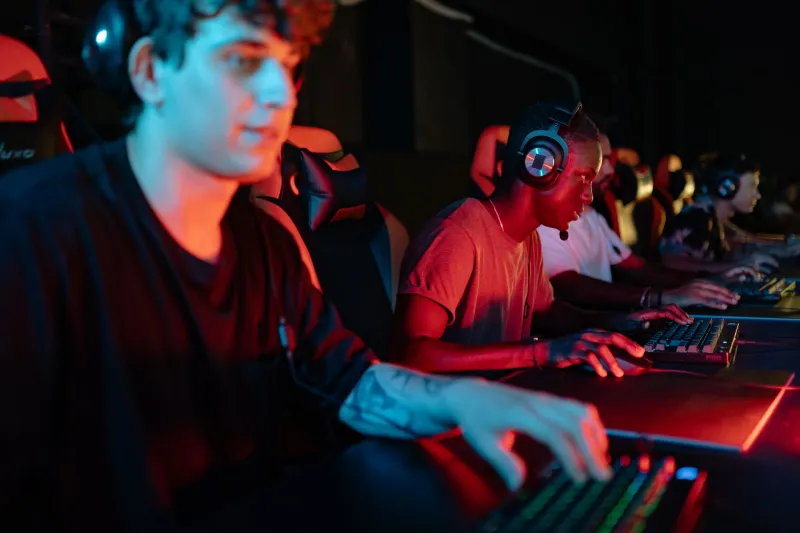
You've been in this spot before. You're mid-session, playing sharp, reading the room — and then someone walks up behind you. Or the stream goes live. Or the chat starts moving. And just like that, the game you were playing ten minutes ago feels like a completely different animal.
It's not your imagination. The moment an audience enters the picture, your brain fundamentally changes how it operates. This isn't a weakness or a mental flaw — it's one of the oldest psychological phenomena in the book. But if you don't understand it, it will quietly drain your performance every single time you play in front of others.
The Science Has a Name for It
Back in 1965, psychologist Robert Zajonc formalized something researchers had been poking at for decades: the presence of others doesn't just affect your mood — it affects your actual performance at a biological level. He called it social facilitation theory, and the core idea is surprisingly nuanced.
When others are watching, your body ramps up what's called "drive" — a state of heightened arousal that makes you more likely to default to your dominant responses. Here's the catch: if your dominant response is the correct one, you perform better under observation. If it's the wrong one, you perform worse.
For experienced players, an audience can actually sharpen focus. For players still building solid fundamentals, that same crowd pressure accelerates every mistake they haven't fully corrected yet.
In short, the crowd amplifies whatever you already are. That's either very good news or a serious problem, depending on where you stand.
How This Plays Out at the Table and on Screen
Multiplayer gaming and live-streamed play have turned this phenomenon into a daily reality for millions of US players. Whether you're grinding competitive ranked matches, sitting in a live poker room, or broadcasting your session to a Twitch audience, the social layer is always present — and always influencing your choices.
Studies on competitive gaming behavior have consistently shown that players take longer to make decisions when they know they're being observed, yet paradoxically make riskier choices at the same time. That combination — slower deliberation paired with higher-variance outcomes — is a recipe for sessions that feel controlled but end in ways that don't match your skill level.
The risk-tolerance spike is especially interesting. Researchers attribute it partly to what's called the "spotlight effect" — the tendency to overestimate how much others are scrutinizing your every move. When you feel like the whole room is watching, conservative plays start feeling like admissions of weakness. You push edges you wouldn't normally push. You call bluffs you'd fold against in private. You go for the highlight when the percentage play is right there.
This is the audience trap in action.
The Streamer Paradox
Live content creators face a uniquely intense version of this dynamic. The pressure to entertain and the pressure to perform optimally are not the same pressure — and they often pull in opposite directions.
A player streaming to even a small audience has two competing incentives running simultaneously: make good decisions that lead to winning outcomes, and make interesting decisions that keep viewers engaged. Folds aren't content. Tight, disciplined play rarely goes viral. The crowd, whether intentionally or not, rewards spectacle.
Some streamers have openly acknowledged adjusting their play style for the camera. That's a choice — and it's a legitimate one if entertainment is the primary goal. But if winning is the goal and the stream is secondary, that same pressure needs to be actively managed rather than unconsciously indulged.
The players who navigate this best treat the audience as part of the environment — present and acknowledged, but not in the decision-making seat.
What Competitive Players Actually Do Differently
High-level players across poker, esports, and online casino competition share a few common approaches to managing the crowd variable. None of them involve pretending the audience doesn't exist.
They develop pre-performance anchors. Before a session goes live or enters a public space, elite players run through a brief mental routine — a few specific thoughts or physical cues that return them to baseline. This isn't mysticism; it's essentially a reset button for arousal levels. Deep breathing, a consistent warm-up sequence, or even a specific phrase can work as the anchor.
They separate identity from outcome. The crowd watches what you do, not who you are. Players who conflate the two tend to protect their image at the expense of their strategy. Developing psychological distance between your decisions and your self-worth is one of the most practically useful skills in competitive gaming.
They practice under simulated pressure. If you only ever play in low-stakes, private environments, your brain has no calibration for performing publicly. Deliberately introducing observation — even just recording yourself — builds the neural tolerance that makes real-audience situations less disruptive over time.
They use process cues instead of outcome cues. Under crowd pressure, it's easy to start measuring success by whether others are reacting positively. Strong players redirect attention back to process: Did I follow my decision framework? Did I read the situation correctly? Outcomes are downstream of process, and keeping focus there insulates you from the crowd's emotional weather.
The Home Field Advantage Is Real — But Complicated
There's a flip side to all of this worth acknowledging. Some players genuinely perform better in front of an audience. The heightened arousal state that derails anxious players can fuel those who are wired for competition. If you've ever noticed that your game sharpens when someone's watching, you're not imagining it — Zajonc's theory accounts for you too.
The key is knowing which category you fall into, and being honest about it. Self-awareness here isn't optional. It's the difference between strategically choosing when to stream, when to play publicly, and when to keep sessions private for edge-preservation purposes.
US players competing in higher-stakes environments especially benefit from this kind of deliberate session planning. The arena — whether physical or digital — has its own energy. Your job is to decide how much of that energy works for you versus against you.
Playing the Same Game Whether Anyone's Watching or Not
The ultimate benchmark for any serious player is consistency across contexts. Can you play the same way alone at midnight as you do in a live tournament with spectators? That gap — between your private game and your public game — is one of the most honest measurements of where your development actually stands.
Narrowing that gap doesn't happen overnight. It takes deliberate exposure, honest self-assessment, and a willingness to treat the psychological side of competition with the same seriousness you give strategy and bankroll management.
But when you get there — when the crowd becomes just another variable you've accounted for rather than a force that's running you — that's when the game really opens up.
Play bold. But play your game. Whether anyone's watching or not.