Short Game, Long Profits: What Session Length Is Really Doing to Your Bottom Line

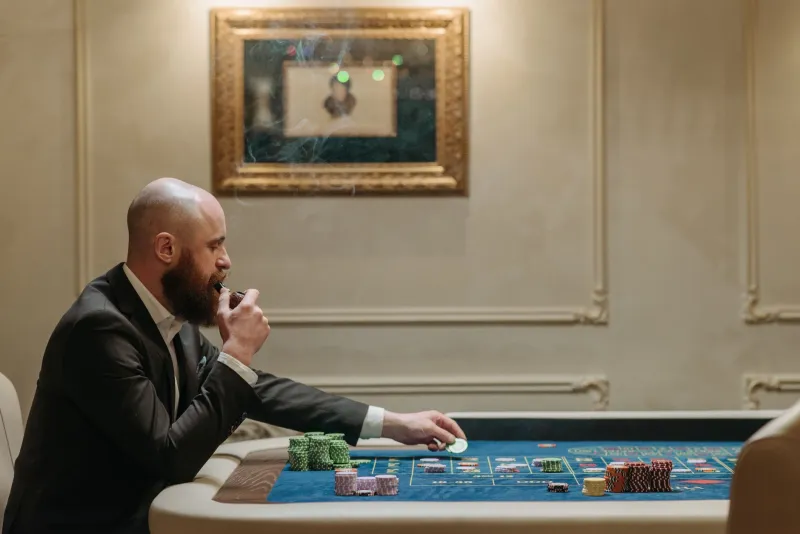
Photo: PattayaPatrol, CC BY-SA 4.0, via Wikimedia Commons
There's a certain mythology in gaming culture around the long grind. The player who outlasts everyone else. The marathon session that turns a losing night into a winning one through sheer persistence. It sounds like discipline. It sounds like dedication. And for the vast majority of players, it is quietly and consistently destroying their results.
Session length is one of the most consequential variables in any serious player's performance equation — and one of the least studied at the individual level. Most players have never deliberately measured how their decision quality changes across a session. They haven't tracked when their emotional control starts to slip, when their reads get sloppy, or when fatigue starts masquerading as confidence. They just play until they stop.
That's not a strategy. It's an accident waiting to compound itself.
What Decision Fatigue Actually Looks Like at the Table
Decision fatigue is a well-documented psychological phenomenon: the quality of decisions degrades progressively as the number of decisions made increases. This has been studied in judges, surgeons, military officers, and chess players. The pattern is consistent — early decisions are generally sharper, more calibrated, and better aligned with rational self-interest. Later decisions show increasing impulsivity, risk aversion in the wrong moments, and a tendency toward default or habitual choices rather than optimal ones.
For gaming, this translates directly. In the first hour of a well-rested session, most experienced players are operating close to their ceiling — reading situations accurately, managing pot odds or bet sizing efficiently, and maintaining emotional neutrality about outcomes. By hour three or four, the same player is frequently making calls they wouldn't make fresh, chasing patterns they'd dismiss early on, and rationalizing decisions they'd critique in anyone else.
The insidious part? Decision fatigue doesn't feel like fatigue. It feels like loosening up. It feels like getting comfortable. Players in the grip of it often describe themselves as being 'in the zone' right at the moment their decision quality is most compromised.
The Numbers Nobody Wants to Track
Here's a challenge: pull your last thirty sessions and split them into two buckets — sessions under two hours, and sessions over three hours. Now look at your win rate, your average decision quality (if you've logged it), and your emotional state at session end. For the overwhelming majority of players who do this exercise honestly, the pattern is stark.
Short, defined sessions consistently outperform extended grinds on a per-hour basis. Not because less time means less exposure to variance — variance is variance regardless of session length. But because decision quality is higher on average, tilt events are rarer and shorter in duration, and the player exits while still in a position of rational control rather than emotional exhaustion.
A 90-minute session where you're sharp for 90 minutes beats a four-hour session where you're sharp for 90 minutes and grinding through fog for the remaining two and a half hours. The math isn't complicated. The discipline to act on it is.
Different Players, Different Optimal Windows
One of the most important nuances here is that optimal session length isn't universal — it's player-specific, and it's also game-specific. Here's a rough framework for thinking about your own window:
The Recreational Player (casual, lower stakes, entertainment-focused): Sessions of 45–90 minutes are typically ideal. Engagement stays high, losses stay bounded, and the session ends before emotional investment tips into frustration or chasing. Think of it like a movie — a defined, enjoyable experience with a clear endpoint.
The Developing Serious Player (building skills, moderate stakes, tracking results): Sessions of 90–150 minutes allow enough volume to generate meaningful data without running into significant decision fatigue. Critical: these players should build in a mandatory break at the 75-minute mark — stand up, step away from the screen, reset.
The Experienced Competitive Player (high volume, consistent stakes, strong emotional discipline): Even here, sessions beyond three hours carry measurable risk. Experienced players who grind long sessions successfully almost universally do so with structured break protocols — not just pauses, but genuine mental resets that interrupt the fatigue accumulation curve.
The Break Protocol That Actually Works
If you're going to play longer sessions, you need a break system that does more than just get you away from the screen for five minutes. Here's what high-performing players at QH88 Arena's competitive tiers tend to use:
The 60/15 Rule: Play for no more than 60 minutes before taking a mandatory 15-minute break. During the break: leave the gaming environment entirely, do something physically active (even just a short walk), and don't review your session stats mid-break. Looking at your running numbers during a break primes emotional responses that carry into the next segment.
The Emotional Check-In: Before resuming after any break, rate your current emotional state on a simple 1–10 scale. Anything below 6 — anxious, frustrated, tilted, tired — is a stop signal, not a 'push through it' signal. The break revealed something important. Listen to it.
The Hard Stop Trigger: Set a session length limit before you start, and treat it as non-negotiable. The worst time to decide when to stop playing is while you're playing. Pre-session you is rational. Mid-session you is compromised. Trust the plan you made when you were thinking clearly.
Rethinking What 'Serious' Actually Means
There's a cultural tendency in gaming to equate time spent with commitment, and commitment with skill. The player who grinds eight hours straight must really care, right? Maybe. But caring isn't the same as performing, and the data doesn't respect effort that isn't producing quality decisions.
The most serious players — the ones building real edges, managing real bankrolls, and improving measurably over time — treat session length as a performance variable, not a virtue signal. They know their window. They protect it. And they walk away from the table while they're still playing their best game, not because they're giving up, but because they're protecting the long-term asset that matters most: the quality of their thinking.
At QH88 Arena, the arena is always open. That's the point. Which means the question is never whether you can play longer. It's whether you should — and what the honest answer to that question is costing you every time you get it wrong.