Cracking the Code: What the Math Behind Casino Games Is Actually Telling You
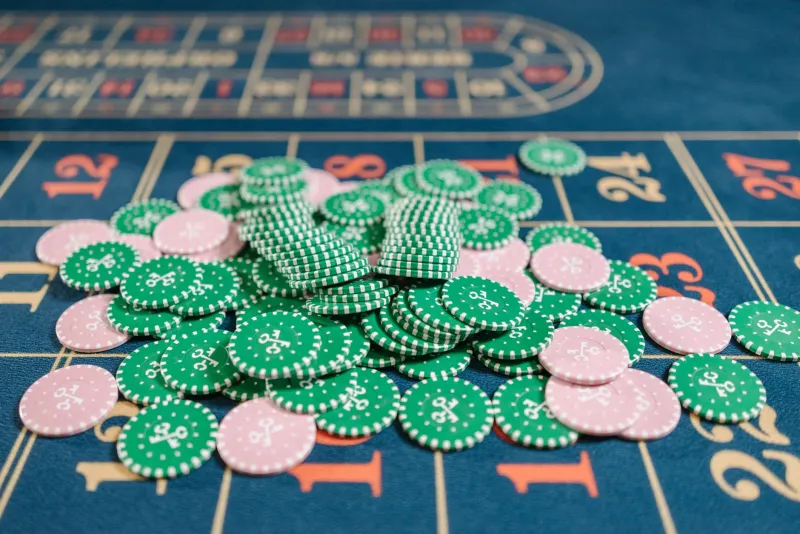
Walk into any casino — brick-and-mortar or online — and you're stepping into a carefully engineered system. The lights, the sounds, the pace of play — all of it is designed to keep you at the table. But underneath the spectacle, there's a layer of pure mathematics quietly running the show. And once you understand how that math works, the whole experience looks completely different.
Let's break it down without the jargon overload.
What "House Edge" Actually Means (Not What You Think)
Most players have heard the term "house edge" tossed around, but few actually grasp what it means in practical terms. Here's the clean version: the house edge is the percentage of every dollar wagered that the casino expects to keep over time. It's not a guarantee on any single spin or hand — it's a long-run statistical average.
Take American roulette. The wheel has 38 pockets (numbers 1–36, plus 0 and 00). If you bet $1 on a single number and hit, you get paid 35 to 1. Sounds generous, right? But the true odds of hitting that number are 37 to 1. That gap — between what you're paid and what the math says you should be paid — is where the house edge lives. In this case, it works out to roughly 5.26%.
European roulette, by contrast, drops the double-zero pocket. That single change cuts the house edge nearly in half, down to about 2.7%. Same game, very different math. That's not a small difference over hundreds of spins.
Expected Value: The Number That Actually Matters
Expected value (EV) is the concept that ties everything together. It's a way of calculating the average outcome of a bet if you played it an infinite number of times. A negative EV means you lose money over time. A positive EV means you gain.
Almost every casino game is negative EV for the player. That's not a conspiracy — it's how the business model works. But the degree of negative EV varies wildly between games, and that's where smart players pay attention.
Here's a rough comparison of house edges across popular games:
- Blackjack (basic strategy): ~0.5%
- Baccarat (banker bet): ~1.06%
- Craps (pass line): ~1.41%
- European Roulette: ~2.7%
- American Roulette: ~5.26%
- Slots: Typically 2%–15%, varies by machine and platform
- Keno: Can exceed 25%
Looking at that list, blackjack played with basic strategy is in a different universe from keno. If you're putting $100 per hour into action, the difference between a 0.5% edge and a 10% edge is the difference between losing $0.50 per hundred bets and losing $10. Multiply that over a serious session and you're talking real money.
Variance: Why Short-Term Results Lie to You
Here's where a lot of players get tripped up. Even in a high-house-edge game, you can win big in a single session. And even in a low-house-edge game, you can go on a brutal losing streak. That's variance — the natural fluctuation around the expected average.
High-variance games (like slots with big jackpot potential) swing wildly. You might win 500x your bet or lose 50 spins in a row without a meaningful return. Low-variance games (like blackjack or baccarat) produce more consistent, smaller swings. Neither is inherently better — it depends entirely on what you're trying to accomplish.
If you're playing with a limited bankroll and need it to last, high-variance games are a trap. If you're chasing a life-changing number and you're okay with burning through chips fast, the math of variance works in your favor for that specific goal — just understand what you're trading off.
Return to Player (RTP): The Slot Machine's Honest Number
For slots and video poker, the equivalent of house edge is called Return to Player, or RTP. An RTP of 96% means the machine pays back $96 for every $100 wagered over its lifetime — theoretically. The house keeps the other 4%.
RTP is published for most online slots, and it's one of the most useful numbers a player can look up before sitting down. A 94% RTP versus a 97% RTP might seem like a rounding error, but over thousands of spins, that 3% gap compounds into serious losses.
Video poker is worth a special mention here. Certain variants — specifically full-pay Jacks or Better — have RTPs that can exceed 99.5% with perfect play. That's the closest thing to a near-break-even game you'll find on a casino floor, digital or physical.
Games That Give You the Most Bang for Your Bankroll
If you want your money to last and you want the best statistical shot at coming out ahead in a session, the hierarchy is pretty clear:
- Blackjack with basic strategy — Low edge, skill matters, widely available online
- Video poker (full-pay variants) — Near-zero edge with proper play, requires learning optimal strategy
- Baccarat (banker bet) — Almost no skill required, very low edge
- Craps (pass/don't pass with odds) — Adds complexity but the math is favorable
Slots aren't on that list, not because they're inherently bad, but because their edge is typically higher and their variance makes bankroll management harder. That doesn't mean avoid them — it means go in with clear eyes.
Making Math Work For You
Understanding game math doesn't mean you'll always win. It means you'll make better decisions about where to put your money, how long to play, and what outcomes are realistic. That's not a small thing.
The players who consistently perform well at QH88 Arena aren't the ones chasing hunches or playing whatever feels hot. They're the ones who've done the homework, picked their spots, and approached the table with a clear picture of the numbers involved.
The math is always there. You might as well read it.