Always Open, Always Dangerous: What 24/7 Access Does to Your Gaming Brain

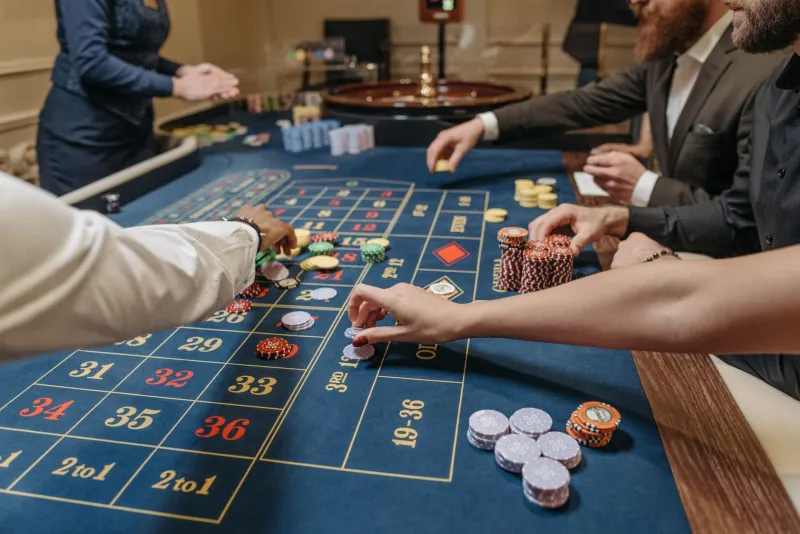
There's a reason brick-and-mortar casinos in Vegas don't have clocks on the walls. The design is intentional — keep you disoriented, keep you playing. But even that old trick has a hard limit baked in: at some point, you have to physically leave. You get tired, your ride shows up, the buffet calls. The real world eventually yanks you back.
Online gaming platforms don't have that problem. Or rather, you have that problem, because the platform never does.
At QH88 Arena, we're big on playing bold — but bold isn't the same as reckless. And understanding how round-the-clock availability reshapes your judgment is one of the most underrated edges a serious player can develop.
The Friction Factor: Why Physical Limits Actually Helped You
Here's something counterintuitive worth sitting with: the inconveniences of traditional gambling venues were quietly protecting you.
Driving to a casino takes effort. Parking costs money. You have to get dressed, carry cash, navigate crowds. All of that friction added up to a natural pause between impulse and action. By the time you sat down at a table, you'd already made a series of conscious decisions to be there.
Online platforms strip all of that away. The gap between "I feel like playing" and "I am playing" collapses to about fifteen seconds. That's not a criticism of the format — it's just reality. And that reality has measurable consequences for how your brain processes risk.
Research in behavioral economics calls this the intention-action gap. Friction increases the gap, giving your rational mind time to weigh in. Remove the friction, and impulse gets a much cleaner path to your wallet.
2 AM Decisions Are Different Decisions
Let's be honest about something most gaming content skips right over: the time of day you play matters enormously.
Fatigue impairs judgment in ways that feel invisible while they're happening. Sleep-deprived players consistently overestimate their skill, underestimate risk, and chase losses more aggressively than well-rested ones. This isn't a character flaw — it's neuroscience. The prefrontal cortex, which handles impulse control and long-term thinking, is among the first systems to degrade when you're running on empty.
Brick-and-mortar venues at least imposed some natural pressure here. Casinos stay open late, sure, but most people aren't driving across town at 3 AM on a Tuesday. Online? That Tuesday night session is just a phone unlock away.
The 24/7 model means you're constantly responsible for making the call your environment used to make for you. That's a heavier lift than it sounds.
The "Just One More" Spiral
Session creep is one of the sneakiest traps in online gaming, and unlimited access supercharges it.
In a physical venue, sessions have natural endpoints. You planned to stay two hours, you stayed three, but the drive home is a hard stop. Online, every endpoint is soft. You can always "just finish this round," "just get back to even," "just play until the next big hand." The platform accommodates all of it without judgment.
This is where the psychological concept of loss aversion does its most damage. Humans feel losses roughly twice as intensely as equivalent gains — so when you're down, the urge to keep playing isn't just habit, it's hardwired. And when the arena never closes, that urge never has to negotiate with a closing time.
Serious players learn to treat their session endpoints the way they treat their bankroll limits: non-negotiable, set in advance, immune to in-the-moment bargaining.
Notifications, Alerts, and the Attention Economy
Here's another layer that didn't exist in traditional venues: the platform can come to you.
Push notifications, promotional emails, bonus alerts — these aren't just marketing tools, they're re-engagement triggers designed to interrupt your day and redirect your attention toward gaming. And they work, because your brain is wired to respond to novelty and potential reward.
Every ping is a small invitation to override whatever you were doing and drop back into the game. Most of the time you'll ignore it. But on a stressful Tuesday when work was rough and you're already a little restless? That notification lands differently.
Being aware of this mechanism doesn't make you immune to it, but it does give you the option to respond deliberately rather than reflexively. Turning off non-essential notifications during hours you've designated as off-limits is one of the simplest, most underused discipline tools available.
Practical Strategies for Staying Sharp in an Always-On World
None of this is meant to scare you away from online gaming — it's meant to help you play it smarter. Here's what disciplined players actually do:
Set session windows, not just session limits. Decide in advance when you'll play, not just how long. "I'll play for an hour" is weaker than "I'll play from 7 to 8 PM on weeknights." Fixed windows build routine and reduce impulse sessions.
Use platform tools aggressively. Most reputable platforms offer deposit limits, session reminders, and cool-off periods. These aren't signs of weakness — they're infrastructure. Use them the way a serious athlete uses a training schedule.
Create your own friction. Log out completely between sessions. Remove the app from your home screen. Make yourself take a five-minute walk before starting any unplanned session. Artificial friction slows the impulse-to-action pipeline and gives your better judgment time to weigh in.
Track your session timing, not just your results. Keep a simple log of when you played, not just how you did. You might discover your worst sessions cluster around late nights or high-stress periods — patterns you can't see without the data.
Treat "the game is always there" as a feature, not pressure. One of the genuine advantages of 24/7 access is that you never have to play right now. The opportunity isn't going anywhere. That means you can always wait for a better moment — better rest, better headspace, better conditions. Use that flexibility.
The Real Edge Is Knowing When Not to Play
The strongest players at any level share one trait that doesn't get nearly enough attention: they're selective about when they show up. They don't play because the game is available. They play because they are ready.
Unlimited access is a genuine perk of online gaming, and at QH88 Arena, we're not going to pretend otherwise. But that perk only pays off if you're the one managing your access rather than letting availability manage you.
The arena never closes. That's the point. What separates the players who thrive from the ones who grind themselves down is understanding that "always open" is an option, not an obligation.